
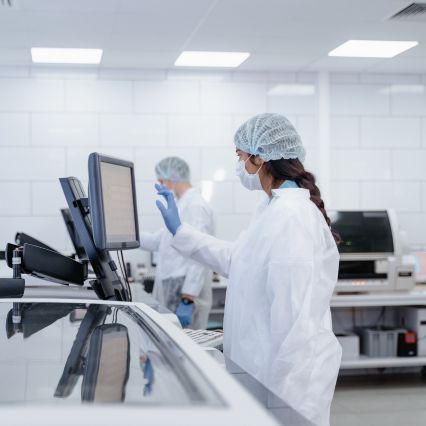
Airbus has opened a new facility in Stevenage aimed at accelerating growth across the UK space industry, giving startups and small businesses free access to advanced laboratories and testing infrastructure.
The Airbus Launchpad, based at the company’s defence and space site in Hertfordshire, will allow more than 50 people from small and medium-sized enterprises (SMEs) and research organisations to work on space technology development at any one time.
The project is backed by a £3.9 million investment from the UK Space Agency, matched by Airbus, and is designed to remove some of the major barriers facing early-stage space companies. By providing access to world-class facilities and engineering expertise, Airbus hopes the Launchpad will help smaller firms test new ideas, reduce development risk, and bring products to market faster.
Airbus says the Launchpad reflects the growing importance of the space sector to the UK’s wider economy and industrial strategy.
Kata Escott, the company’s UK managing director for defence and space, stressed that continued innovation will be critical as the industry expands, warning that “we can’t rest on our laurels, we need to keep innovating”.
She also highlighted the sector’s role in enabling emerging technologies, describing it as “essential” for AI, robotics and defence, which she said were “really important for productivity”.
“Space is so important for the country and everyday lives. It is driving economic growth and creating brilliant jobs across this area and across the country,” she added.
The UK’s growing role in the global space economy
The launch of new facilities comes at a time when the UK space sector is expanding rapidly and attracting significant private investment.
Recent figures show the industry supports more than 55,000 jobs and generates around £18.6 billion in income, with satellite services underpinning close to 18% of UK GDP through applications such as communications, navigation and Earth observation.
The UK is also ranked number one in Europe for private investment in space, despite accounting for only a small share of global civil space spending. Growth in the sector is also driving innovation across adjacent industries, including advanced manufacturing, precision engineering, defence and data-driven technologies.
This wider ecosystem is not only supporting major aerospace firms, but also creating new opportunities for emerging companies developing next-generation space solutions.
New space labs offering stability amid UK funding pressure
The opening of Airbus Launchpad also comes at a critical moment for the UK research and innovation landscape.
In recent weeks, the Science and Technology Facilities Council (STFC) confirmed it will need to cut £162 million in spending by 2029–30, following last year’s 15% reduction in new grants. Researchers in astronomy and physics have warned that continued austerity measures could drive talent out of the sector and weaken the UK’s long-term scientific standing.
With space research now competing against other national priorities such as AI, clean energy and quantum technologies, access to industry-led infrastructure is becoming increasingly important.
Facilities like Airbus Launchpad may help alleviate some of the pressure created by tightening public research budgets, offering SMEs and innovators alternative routes to test, collaborate and progress technologies even as traditional grant funding becomes more constrained.
By opening its doors to smaller firms, Airbus is helping ensure that innovation continues despite growing competition for limited R&D resources.
The SME opportunity in the UK space sector
SMEs play a central role in the UK’s space economy, bringing agility, innovation and specialist expertise to the supply chain.
There are around 1,900 organisations active in the UK space sector, the majority of which are small and medium-sized businesses. These firms are working across areas such as satellite components, propulsion systems, Earth observation, space software and data analytics.
However, despite their potential, many space SMEs have historically faced challenges that can limit growth, including:
-
High upfront costs for testing infrastructure and prototypes
-
Limited access to specialist equipment and engineering support
-
Difficulty scaling from early-stage demonstrations to flight-ready hardware
This is where initiatives like Airbus Launchpad, along with accelerator programmes, are becoming increasingly important for helping smaller companies move faster and compete globally.
The role of new space labs in helping SMEs succeed
Facilities such as Airbus Launchpad provide small tech firms with real-world environments to develop, test and refine their technologies alongside established industry leaders.
The site offers access to capabilities including:
- Robotics and rapid prototyping tools
- Augmented reality and advanced testing infrastructure
- Collaborative engineering support from Airbus specialists
The benefits for startups are significant. Early access to high-end facilities helps companies reduce risk, validate innovations before major investment, and build partnerships with prime contractors and institutional players.
Being based in recognised hubs such as Stevenage also strengthens the UK’s ability to attract and retain highly skilled space engineering talent.
Funding and support for growth
The Launchpad initiative also reflects the wider funding ecosystem that has emerged to support innovation across the UK space sector.
The UK Space Agency and related programmes provide a range of opportunities for SMEs, including:
-
Grants aimed at satellite and space technology development
-
The UK Space Agency Accelerator Programme, helping startups scale commercially
-
Shuttle and similar schemes supporting SMEs entering the space market from other sectors
-
Export-focused initiatives such as the Accelerating Investment Export Pathway
These programmes are not only supporting research and development, but also helping companies strengthen networks, secure investment, and recruit the specialist skills needed to grow internationally.